








A ship’s mooring arrangement is
A ship’s mooring arrangement is only as reliable as the lines that hold her in place. While mooring may appear routine, the behaviour, construction, and performance of mooring lines vary significantly—and understanding these differences is essential for safe operations. Modern vessels rely on a mix of traditional and advanced line types, each with distinct strengths and limitations.
A Guide to Mooring Operations Onboard Ships digs into the evolution of mooring lines, explaining why the right selection is crucial for operational safety and efficiency. Below is a practical overview of the three major categories of mooring lines used onboard ships today.
1. Wire Ropes
Wire ropes have remained a cornerstone of maritime mooring for decades, and for good reason. Built from multiple strands of steel wire twisted together, they offer exceptional breaking strength, abrasion resistance, and dimensional stability under load.
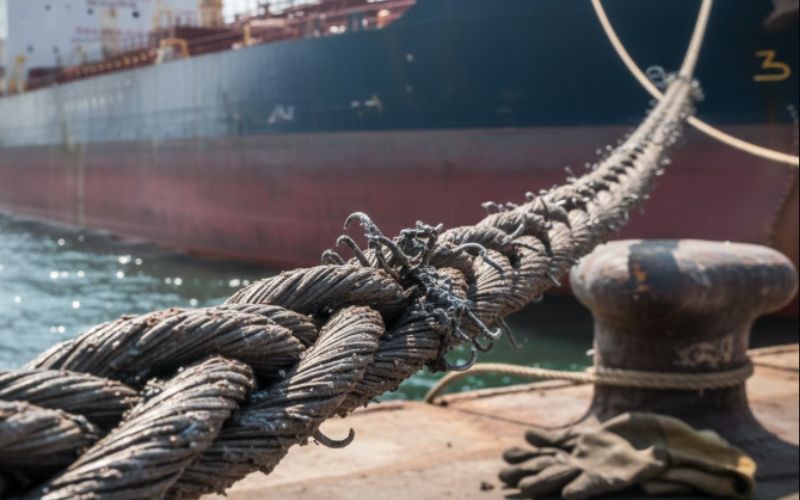
Their biggest advantage is also their drawback: wire ropes stretch very little. This makes them ideal for vessels that require firm, predictable restraint, such as tankers and
Content Original Link:
" target="_blank">