











For operators running offshore support vessels on continuous deepwater schedules, lifting equipment that imposes daily management overhead on deck crews is not…

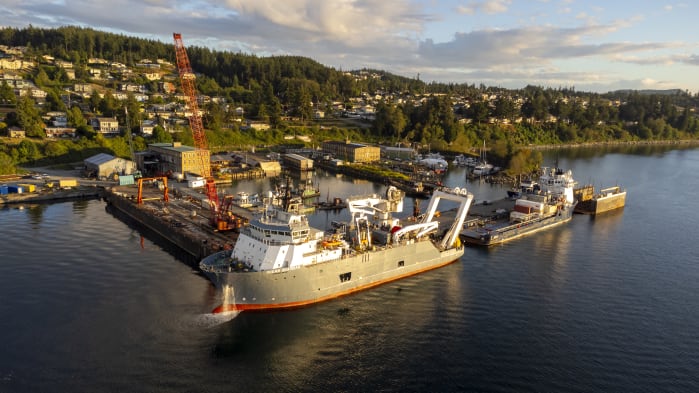
For operators running offshore support vessels on continuous deepwater schedules, lifting equipment that imposes daily management overhead on deck crews is not just a safety issue — it is a throughput problem. Stabbert Maritime found that out running its multipurpose vessel Ocean Guardian on subsea and survey support missions to 6,000 meters, and addressed it by replacing steel wire rope with a synthetic alternative.
The Ocean Guardian is configured for near-continuous operations, which means its hoisting system is active far more often than on vessels that lift intermittently. That frequency exposed the accumulated cost of steel wire's operational characteristics in a way that lower-tempo deployments tend to mask.
Steel wire rope under load carries snap-back risk severe enough to require permanent crew exclusion zones around the line during operations. On a vessel where lifting happens daily, those exclusion zones are not occasional restrictions — they become a fixed feature of how the deck is organized and how work is sequenced. Tasks get re-ordered, crew positioning adapts to the rope rather than to the job, and the lifting system effectively becomes
Content Original Link:
" target="_blank">