














Top 5 Crypto Wallets to Buy Your First Bitcoin
FinTech moves fast. News is everywhere, clarity isn’t.
FinTech Weekly delivers the key stories and events in one place.
Click Here to Subscribe to FinTech Weekly's Newsletter
Read by executives at JP Morgan, Coinbase, BlackRock, Klarna and more.
Buying your first Bitcoin is a lot like your first parachute jump: stepping into the unknown is always intimidating. A beginner’s mind is often filled with outdated stereotypes from 2017 — that you have to register on a complex exchange with green numbers on a black background, figure out trading order books, send money to strangers via P2P platforms, and pray you don't get scammed.
In 2026, it is time to forget that hardcore experience. Today, buying Bitcoin (or even a tiny fraction of it, called satoshis) shouldn't be any harder than ordering sneakers on Amazon or paying for a Netflix subscription. The industry has matured, and the most important button in a good crypto wallet is no longer "Liquidity Pool Staking," but a simple, clear "Buy BTC with Card" (via Apple Pay or Google Pay).
However, there is a catch. If you just download the first wallet you see in the App Store, you risk ending up with a tool designed for tech geeks, where you might get tangled in blockchain networks and lose money on fees before you even secure your first asset.
How We Chose the Perfect Wallets for Beginners
We immediately filtered out hardcore hardware safes that require computer connections and complex DeFi platforms. We only kept applications that can be installed on your phone in under two minutes.
Our Top 5 list is built on three unbreakable rules:
- Built-in Fiat Gateway: You shouldn't have to leave the app to buy crypto. The wallet must directly accept your bank card, Apple Pay, or a bank transfer (IBAN).
- Idiot-Proof UX: The interface must be crystal clear. Balance, Buy button, Send button. The fewer extra tabs with NFTs and complex trading bots on the main screen, the better for a beginner.
- Security Without Paranoia: The wallet must protect your funds reliably, but the process of creating a backup (a seed phrase or account linking) must be explained in plain human language, not crypto-jargon.
Based on these criteria, here are the top 5 tools in 2026 that will make your first encounter with Bitcoin safe and comfortable.
1. Trustee Plus
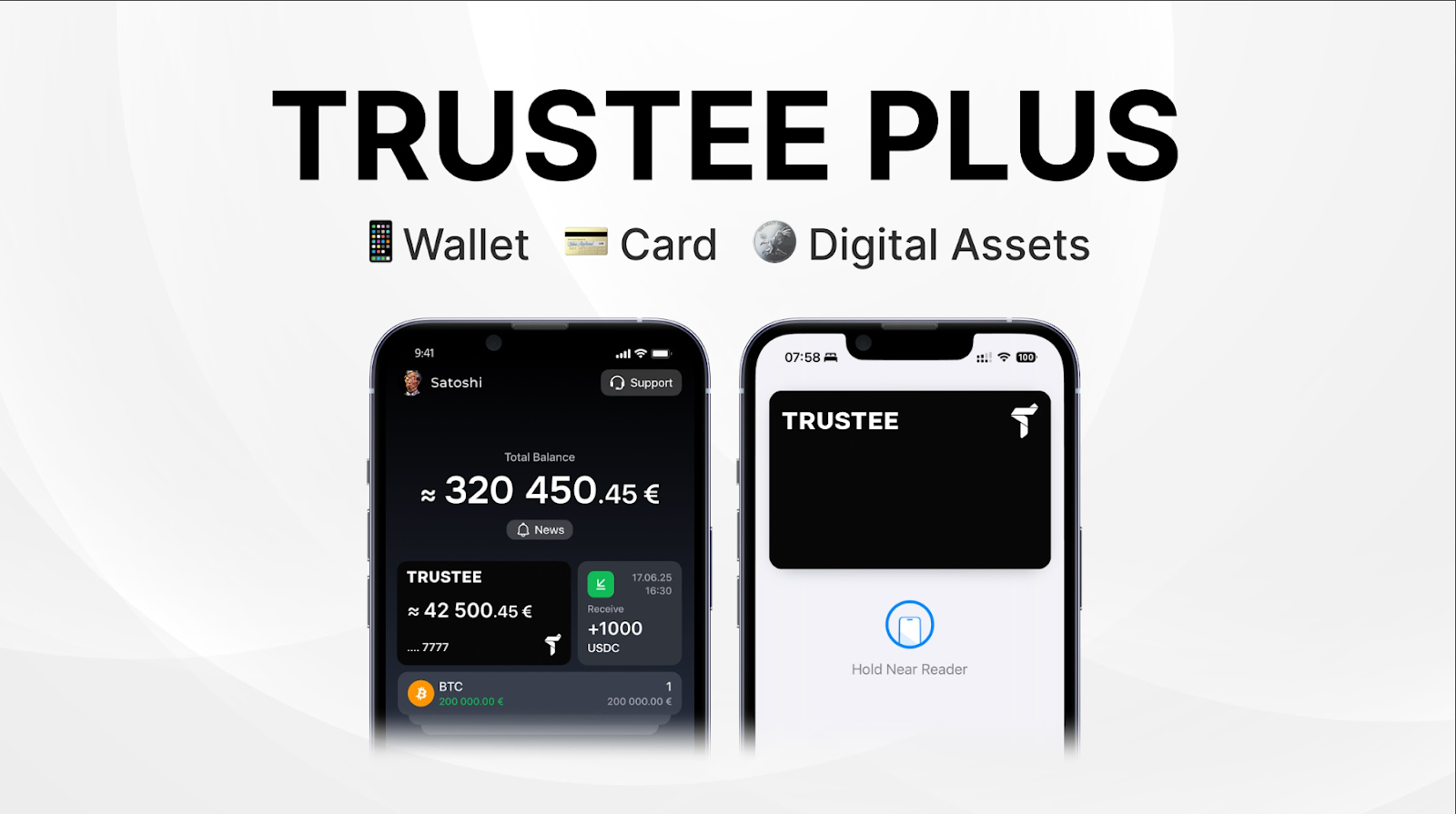
If you want to buy your first Bitcoin, but the mere word "crypto exchange" gives you a panic attack, Trustee Plus is your lifesaver. This app looks and works just like your familiar mobile bank (such as Revolut or N26), but it is powered by a robust Web3 infrastructure under the hood. For a beginner in Europe, this is an absolute must-have because it completely erases the boundary between fiat money and cryptocurrency.
Here are the main features that make handling crypto incredibly simple:
- EUR Top-ups and a Personal IBAN: You no longer need to search for shady P2P exchangers. Trustee Plus provides you with a full European account number (IBAN). You simply make a standard bank transfer (SEPA) from your salary card directly into the app, and then buy your first Bitcoin with those Euros in a couple of clicks.
- Instant Transfers by Phone Number: Want to send some purchased Bitcoin to a friend? Forget about long, intimidating blockchain addresses where a single-letter typo costs you all your money. If the recipient also uses Trustee, you can send them crypto using just their phone number — instantly and with zero fees.
- The Trump Card — The Crypto Card: You bought Bitcoin, its price went up, and you want to spend your profits? In a standard Web3 wallet, you would have to withdraw the money back to an exchange. In Trustee, you can issue a virtual card in 59 seconds, add it to Apple Pay or Google Pay, and simply go to the supermarket. The app automatically converts your crypto to Euros the moment you tap the terminal.
The biggest fear of any beginner is, "What if I press the wrong button and my money disappears?" Specifically for these cases, Trustee Plus features a real, live support team. No bots with templated auto-replies — real people will help you in plain language at any stage, from passing verification to your first BTC purchase.
And a nice bonus: you can not only save in crypto but also earn without investment. When you realize how easy it is to buy Bitcoin here, you will definitely tell your friends about it. Trustee has a built-in referral program: you simply share your link and start receiving up to 45% of the exchange commissions from all your friends. It is an excellent passive income for a confident start.
The interface is so clean, and the overall process is so straightforward, that even your grandmother could easily figure out how to buy her first Bitcoin here.
2. Trust Wallet
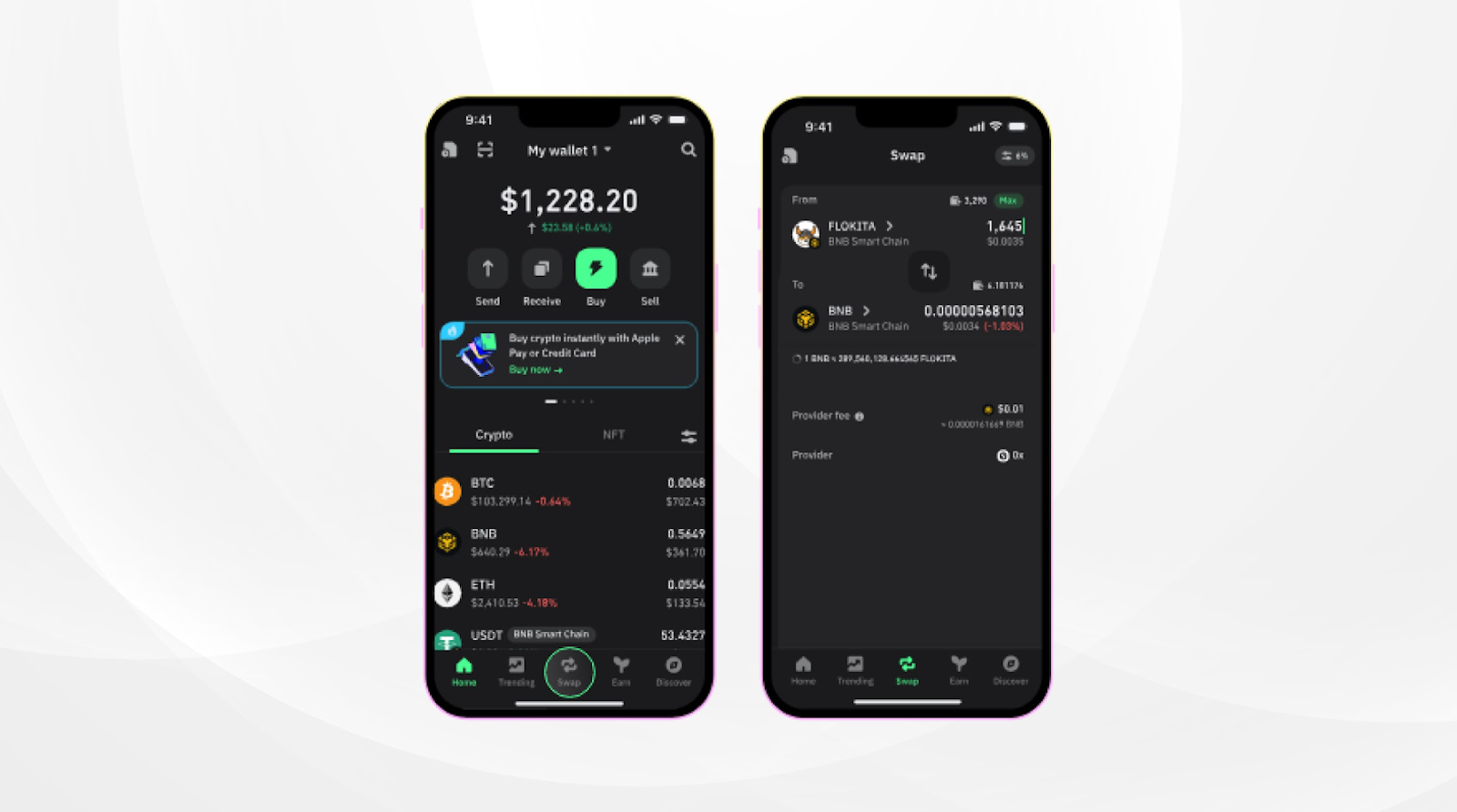
Trust Wallet is one of the most widely used non-custodial wallets globally, originally acquired by the Binance exchange in 2018. It operates entirely on-chain, meaning users hold their own private keys and have full control over their funds. The application supports millions of digital assets across over a hundred different blockchains, making it a versatile tool for users who plan to explore various networks beyond just Bitcoin. It also features a built-in dApp browser for interacting with decentralized finance protocols.
- How to buy Bitcoin: The wallet integrates several third-party fiat-to-crypto providers (such as MoonPay, Mercuryo, and Simplex). When you select "Buy BTC" and enter an amount (e.g., 100 EUR), the app displays which provider currently offers the best exchange rate for card or Apple Pay purchases.
3. Coinbase Wallet
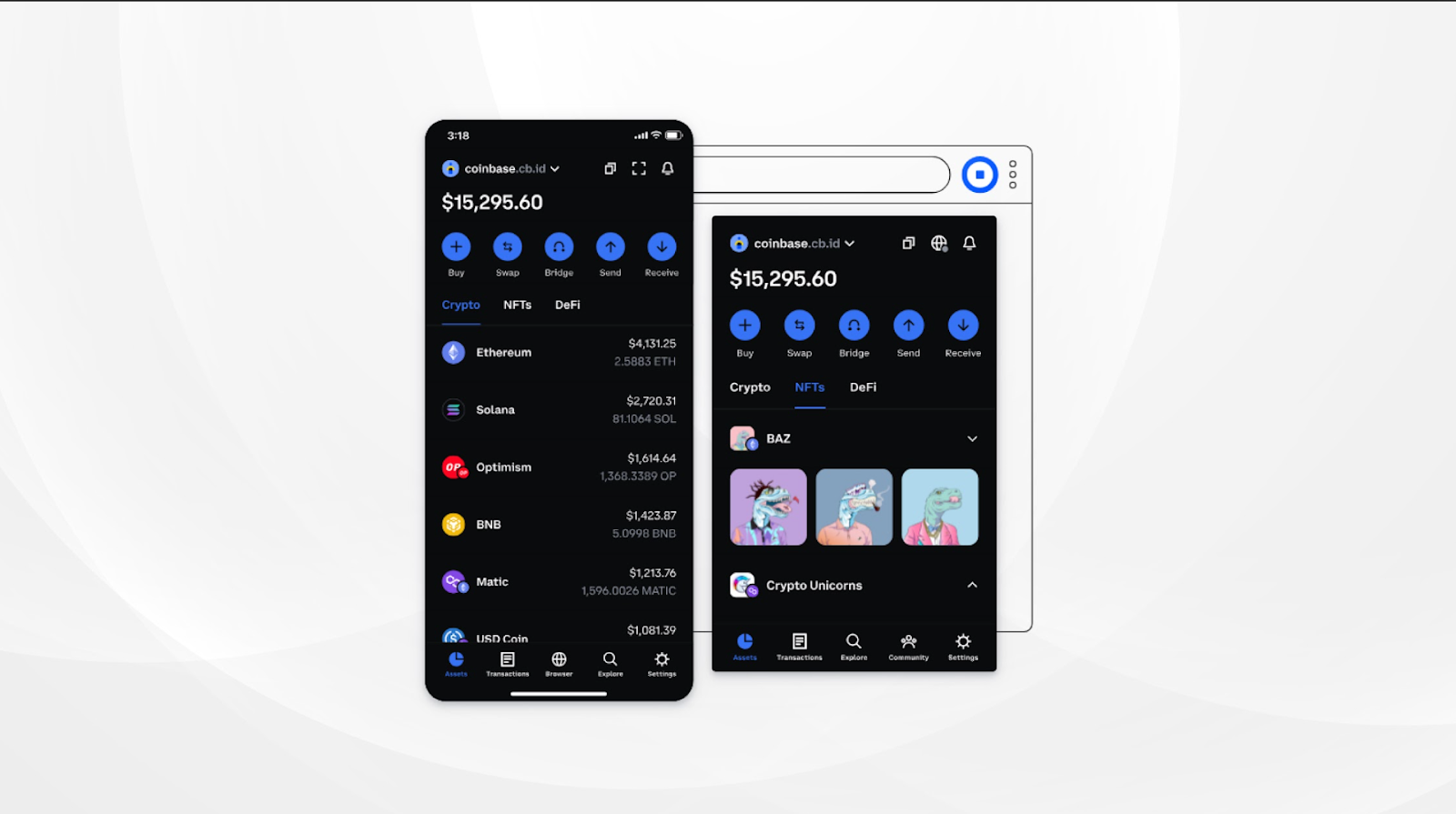
Developed by the US-based cryptocurrency exchange Coinbase, this is a separate, self-custody wallet app designed with a minimalist interface. Unlike the main centralized exchange where the company holds your assets, Coinbase Wallet gives users complete ownership of their private keys. It supports a wide range of networks, including Bitcoin, Ethereum, and Solana, and provides direct access to decentralized applications. The wallet is often chosen by users who prefer products backed by heavily regulated, publicly traded companies.
- How to buy Bitcoin: If you already have an account on the main Coinbase exchange, you can link the two to seamlessly transfer assets. If not, the wallet allows users to purchase crypto directly using a bank card through its built-in Coinbase Pay gateway.
4. Phantom
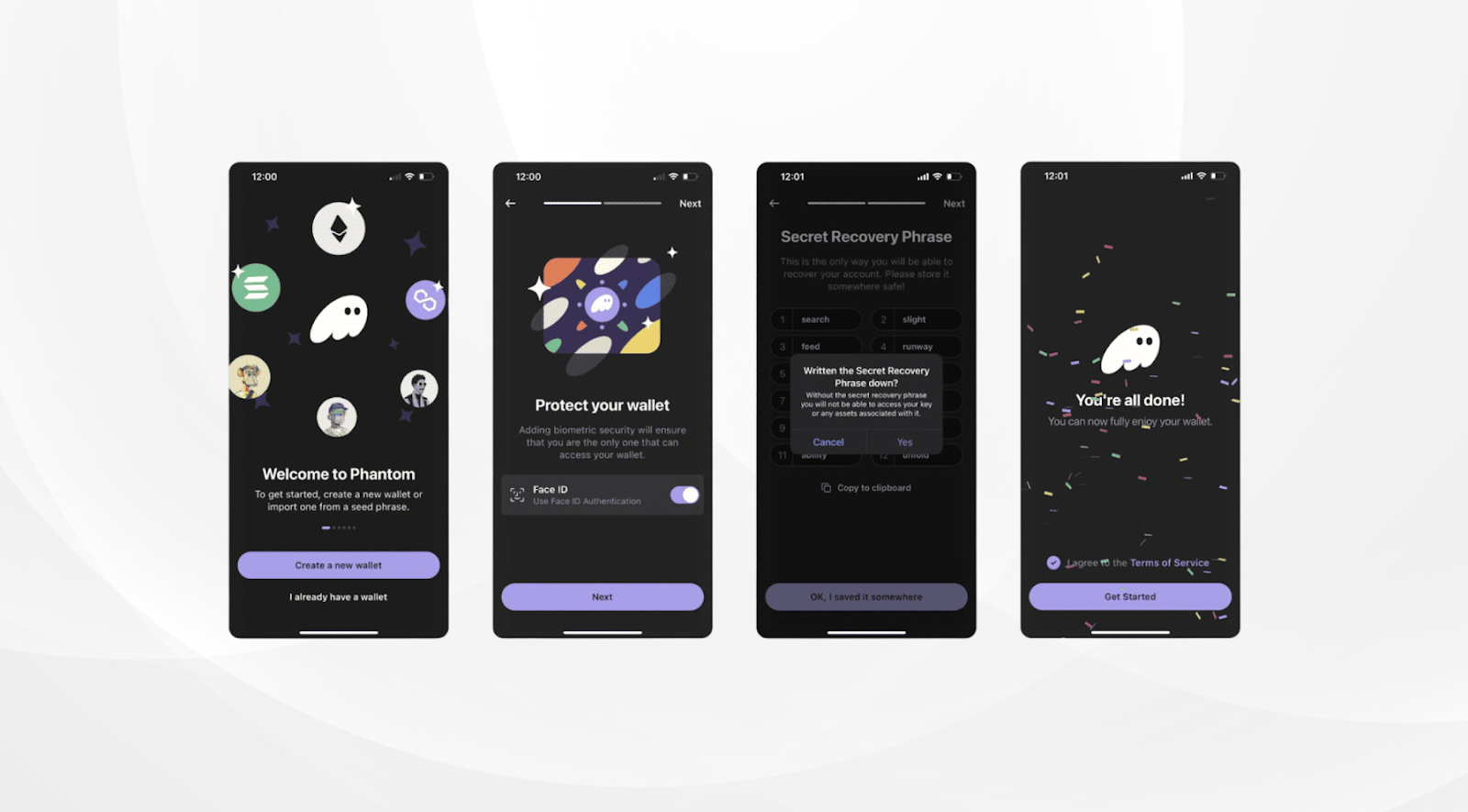
Originally built specifically for the Solana network, Phantom has since expanded its infrastructure to support Bitcoin, Ethereum, and Polygon. It is available as both a browser extension and a mobile app. Phantom is recognized for its clean, straightforward user interface and visual asset management, which makes tracking portfolios simple. Aside from basic transfers, it includes built-in cross-chain swap functionalities and a dedicated tab for managing digital collectibles (NFTs).
- How to buy Bitcoin: Similar to Trust Wallet, it uses integrated third-party providers for fiat purchases. One notable functional feature is its automatic spam filter, which hides unsolicited scam tokens that are frequently sent to public wallet addresses, adding a layer of basic security for new users.
5. OKX Web3 Wallet
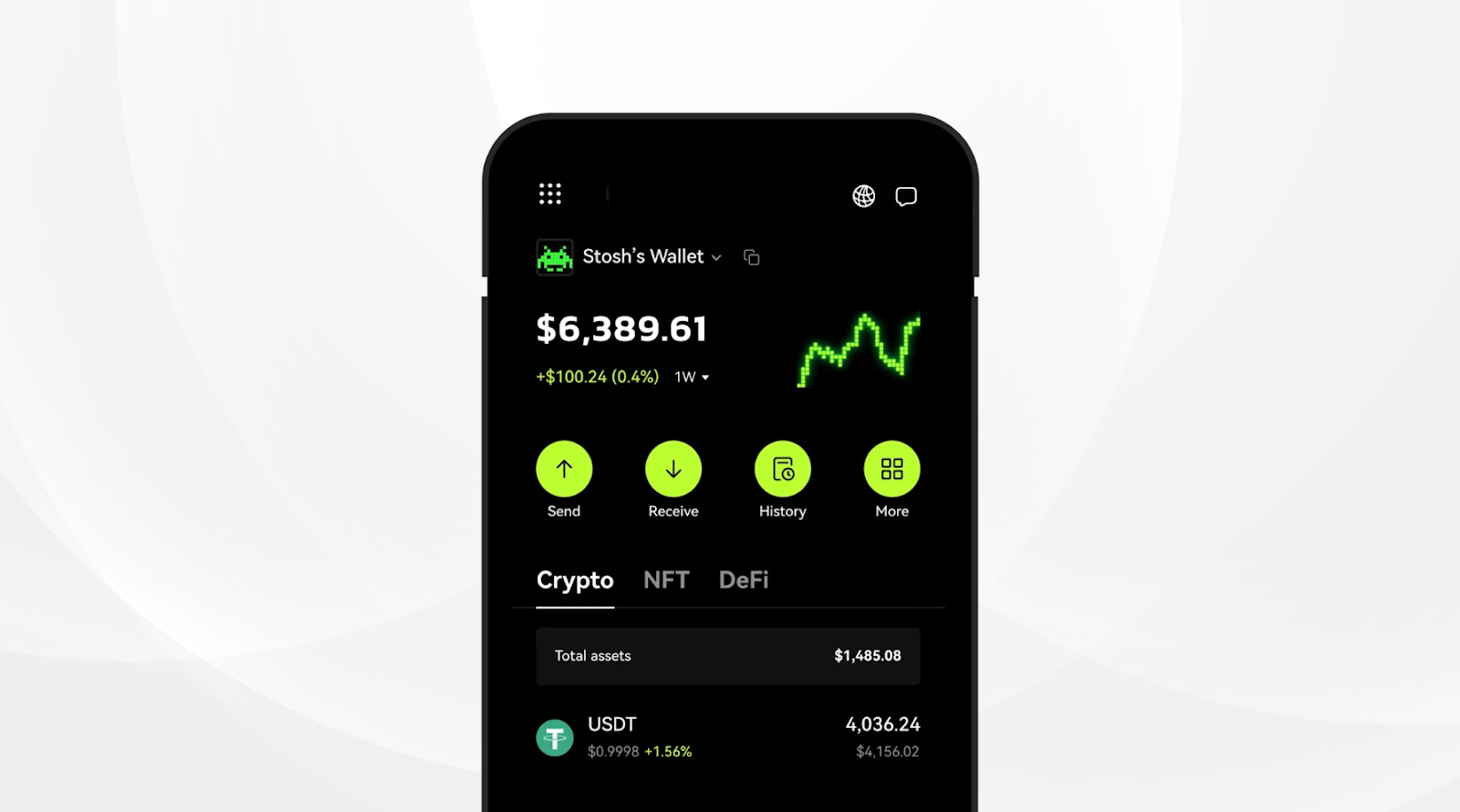
The OKX cryptocurrency exchange includes a Web3 wallet directly within its main application, functioning on a separate tab independently from the centralized exchange balance. This design allows users to switch between standard CeFi (centralized finance) and DeFi (decentralized finance) environments without downloading multiple apps. The Web3 wallet supports over 70 blockchains and features an aggregator for decentralized exchanges, cross-chain bridges, and various Web3 protocols.
- How to buy Bitcoin: It acts as a rate aggregator. When purchasing crypto with a fiat card, the OKX Web3 Wallet scans both third-party fiat providers and offers on its own P2P platform to find the current available conversion rate for Euros to Bitcoin.
The Web3 payment landscape changes rapidly, so to stay updated on the top crypto cards and avoid outdated or expensive solutions, keep an eye on the latest analytics published by Incrypted.
Who is Actually Selling You Bitcoin?
One of the main secrets a beginner needs to know is this: when you click the "Buy" button in standard Web3 wallets (like Trust Wallet or Phantom), the wallet itself is not selling you anything. The wallet is simply an interface, a secure shell for storage.
The crypto is actually sold to you by integrated fiat providers (gateways) — companies like MoonPay, Mercuryo, or Simplex. These are legal exchange services integrated right into the app. When you enter your card details or pay via Apple Pay, the money goes to them, and in return, they send Bitcoin to your blockchain address.
Why does buying with a card always involve a fee? Many beginners are outraged when they buy 100 EUR worth of crypto but only receive 95 EUR worth of Bitcoin on their balance. Where did the 5 EUR go? Let's break it down:
- Acquiring Fee (to the card issuer): Your bank takes a percentage for processing the card payment (usually 1.5-2%).
- Provider Fee: The gateway (e.g., MoonPay) takes its cut for the conversion service.
- Network Fee (Gas): For the Bitcoin to reach your wallet, a fee must be paid to the miners for processing the transaction on the blockchain.
Yes, buying directly with a bank card in traditional Web3 wallets costs an average of 3-5% in total fees. You are paying that premium for speed and convenience. It is like food delivery: you can go to the kitchen and cook it yourself (navigate exchanges and P2P trading), or you can pay the courier and get the result handed to you in two minutes.
(This is exactly why solutions like Trustee Plus, where you can deposit Euros for free via a SEPA IBAN transfer and exchange them within the ecosystem with a minimal, fixed fee, are currently so popular among European users).
Seed Phrase vs. Account: The Golden Rule of Security
Before you enter your credit card number, you must clearly understand what type of wallet you have downloaded. In the crypto world of 2026, there are two fundamentally different approaches to security:
- Classic Web3 (Trust Wallet, Phantom, Coinbase Wallet). Upon registration, you will be given 12 secret English words (a Seed Phrase). Attention: these words are your money. If you delete the app, forget your password, and throw away the piece of paper with those 12 words, your Bitcoin will burn forever. In the Web3 world, there is no support team that will reset your password via SMS. It is absolute financial freedom, but also absolute personal responsibility.
- Neobank Format (Trustee Plus). This operates on the familiar logic of a bank account. You register using your phone number, link your email, and pass identity verification with your documents. If you lose your phone or forget your PIN, you simply contact the live support team or restore access via SMS. For a beginner who isn't used to keeping pieces of paper with passwords in a safe, this option is hundreds of times safer.
Conclusion: Busting the "Whole Bitcoin" Myth
The most common misconception that stops people from starting is: "Bitcoin costs tens of thousands of dollars; I don't have that kind of money to buy it."
You do not need to buy a whole Bitcoin. Just as 1 Euro consists of 100 cents, 1 Bitcoin consists of 100 million micro-coins called "satoshis." You can download any wallet from our Top 5 list and buy exactly 50 or 100 Euros worth of Bitcoin.
In 2026, the barrier to entry into crypto has dropped to the cost of buying a cup of coffee. Choose the app that feels most comfortable to you, decide whether you are ready to guard 12 secret words or prefer the peace of mind of an account tied to your phone number, and simply make your first transaction. Web3 has long become as easy as your everyday mobile banking.
Content Original Link:
" target="_blank">