









In commercial shipping,
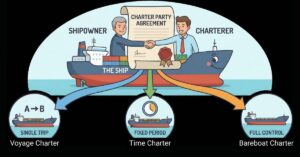
In commercial shipping, few documents shape the movement of goods as profoundly as the charterparty. Whether a vessel is hired for a specific voyage, a period of time, or transferred entirely into a charterer’s control, the charterparty defines the obligations, rights, and expectations of both parties.
As highlighted in the introductory chapters of Charterparties in Shipping – Beginners Guide to Maritime Law Series, these agreements sit at the heart of maritime commerce, influencing everything from freight negotiations to operational decisions on the water.
Understanding the basic concepts that form the backbone of charterparties is essential for shipowners, charterers, brokers, and anyone working in maritime logistics. Below are five foundational concepts that shape how charterparties are drafted and executed.
1. Types of Charterparties
Before any agreement can be made, parties must determine the type of charterparty that suits their commercial objectives. As explained in the opening sections of the ebook (pp. 2–4), the three most widely used forms are:
Voyage Charter – The shipowner agrees to carry cargo between specified ports for a set freight rate. Here, the owner retains operational control while the
Content Original Link:
" target="_blank">


