









In commercial shipping,
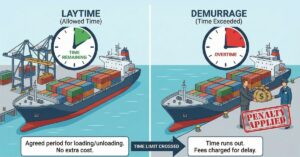
In commercial shipping, few contractual terms carry as much weight—or generate as many disputes—as laytime and demurrage. These two concepts form the core of voyage chartering, influencing both operational efficiency and financial outcomes for shipowners, charterers, and cargo interests. Understanding their meaning is not simply an academic exercise; it is essential for anyone navigating maritime contracts, port operations, or cargo logistics.

The following overview distils the fundamentals of laytime and demurrage into a clear, practical list. While this article introduces the essentials, the detailed interpretations, case law influences, and calculation techniques are explored more comprehensively in the Laytime and Demurrage – A Practical Guide for Maritime Professionals and Seafarers.
What Is Laytime?
Laytime refers to the agreed period during which a charterer may load or discharge cargo without incurring additional charges. It is a defined allowance of time embedded directly into the voyage charter party. According to the eBook, “Laytime refers to the period agreed upon in a charter party during which the charterer
Content Original Link:
" target="_blank">


