









Charterers occupy a central position
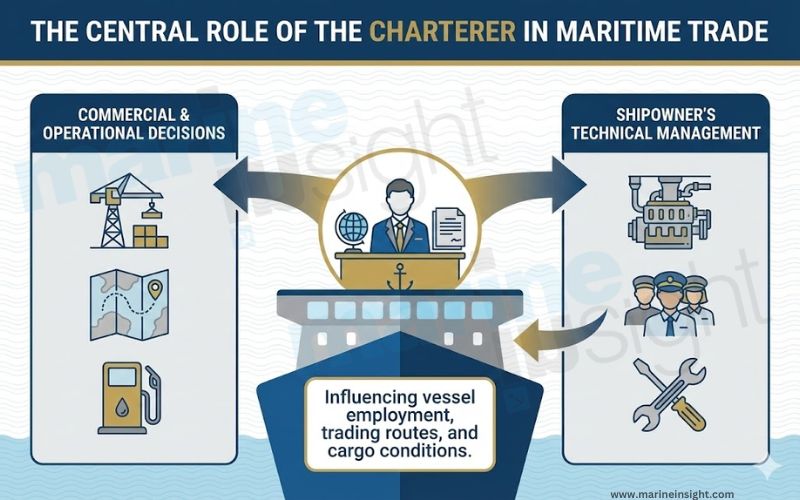
Charterers occupy a central position in commercial shipping, influencing how vessels are employed, where they trade, and under what conditions cargo is carried. While shipowners retain responsibility for the technical management of vessels, charterers often control key commercial and operational decisions through charter party agreements. A clear understanding of charterer responsibilities is therefore essential for avoiding disputes, ensuring safety, and maintaining efficient maritime operations.
Outlined below are five important responsibilities commonly associated with charterers.
1. Payment of Freight or Hire
One of the most fundamental obligations of a charterer is the timely payment of freight or hire, depending on the type of charter. In voyage charters, freight is usually linked to the successful carriage of cargo, whereas time charters involve periodic hire payments for the use of the vessel. Delayed or missed payments can disrupt commercial relationships and may entitle shipowners to suspend services or pursue contractual remedies.
2. Proper Employment of the Vessel
Charterers are responsible for employing the vessel strictly within the terms agreed in the charter
Content Original Link:
" target="_blank">


