









In international shipping, cargo rarely
In international shipping, cargo rarely moves directly from shipper to carrier without expert coordination. Freight forwarders occupy a critical space in the logistics chain, acting as organisers, coordinators, and problem solvers who ensure that goods move efficiently across borders. While often perceived as facilitators, freight forwarders carry defined operational and legal responsibilities that can significantly influence the success—or failure—of a shipment.
Outlined below are five important responsibilities that shape the role of freight forwarders in modern maritime trade.
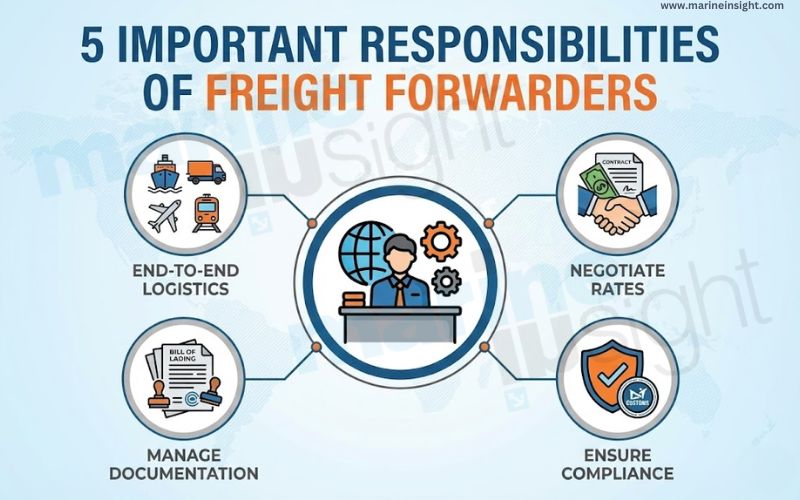
1. Planning and Coordinating End-to-End Logistics
One of the primary responsibilities of a freight forwarder is to plan and coordinate the movement of cargo from origin to destination. This involves selecting suitable transport modes, arranging space with carriers, and sequencing multimodal connections where required. Effective planning requires a strong understanding of transit risks, port congestion, and regulatory constraints. A well-managed logistics plan minimises delays, controls costs, and reduces exposure to avoidable disruptions.
2. Negotiating Freight Rates and Transport Terms
Freight forwarders frequently negotiate freight rates on behalf of their clients by
Content Original Link:
" target="_blank">


